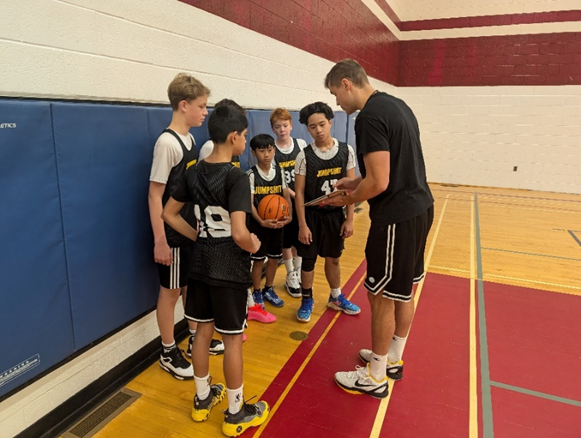
Structured exercises like squats, lunges, and box jumps help players increase vertical jump for dunking in basketball.
Dunking a basketball is a milestone many players dream about, but only a small percentage actually achieve. The biggest misconception is that dunking depends only on height. In reality, the ability to dunk comes from explosive leg power, efficient movement, and correct training. Many athletes train hard but still fail to see results because they focus on the wrong exercises or never measure their jumping ability properly.
If you want to jump higher and improve your chances of dunking, you need a clear understanding of how vertical jump works and which exercises directly contribute to explosive lift. This guide breaks down the most effective exercises and training principles that can help you build a stronger, higher jump.
Why Dunking Feels So Difficult for Most Players
Many basketball players struggle to dunk due to a combination of physical and technical limitations. The most common issues include:
- Insufficient explosive strength – Weak leg muscles limit upward force.
- Inefficient jumping mechanics – Poor coordination reduces jump height.
- Lack of proper training structure – Random workouts don’t lead to progress.
- No progress tracking – Without measuring vertical jump, improvement is hard to judge.
Dunking requires clearing the rim with control, not just touching it. This means your training must go beyond basic leg workouts and focus on explosive movement.
Understanding the Key Factors That Affect Vertical Jump
Before focusing on exercises, it’s important to understand what determines how high you can jump.
1. Body Height
Taller athletes naturally start closer to the rim, but height alone does not guarantee dunking ability. Many shorter players dunk successfully because they develop superior jumping power and technique.
2. Standing Reach
Standing reach is the height you can touch while standing flat on the ground with one arm extended. This measurement plays a major role in determining how much vertical jump you need to dunk.
3. Vertical Jump Height
Vertical jump measures how far your feet leave the ground during a jump. Improving this number is the most reliable way to increase dunk potential. Strength, speed, coordination, and flexibility all influence vertical jump performance.
Most Effective Exercises to Increase Vertical Jump
The following exercises are proven to build the strength and explosiveness required for dunking.
1. Squats
Squats are one of the best exercises for building lower-body strength. They target the quadriceps, hamstrings, glutes, and core, all of which are essential for jumping.
How to perform:
- Stand with feet shoulder-width apart
- Push hips back and lower into a squat
- Keep chest upright and spine neutral
- Drive through heels to stand up
Training tip: Start with bodyweight squats, then gradually add resistance to increase power.
2. Forward Lunges
Lunges strengthen each leg independently, improving balance and stability during takeoff.
How to perform:
- Step forward with one leg
- Lower the back knee toward the floor
- Push through the front foot to return
- Alternate legs
Training tip: Controlled movement is more effective than rushing repetitions.
3. Calf Raises
Calf muscles play a critical role during the final push-off phase of a jump.
How to perform:
- Stand on a raised surface
- Lower heels slowly
- Push up onto toes
- Pause briefly at the top
Training tip: Single leg calf raises help correct strength imbalances.
4. Box Jumps
Box jumps train explosive power and fast muscle activation.
How to perform:
- Stand in front of a sturdy box
- Swing arms and jump upward
- Land softly with bent knees
- Step down safely
Training tip: Focus on explosive takeoff rather than speed.
5. Jump Squats
Jump squats convert strength into vertical power.
How to perform:
- Squat down normally
- Explode upward into a jump
- Land softly and repeat
Training tip: Quality jumps are more important than high repetition counts.
6. Bulgarian Split Squats
This exercise builds single-leg strength and improves jumping balance.
How to perform:
- Place rear foot on a bench
- Lower into a squat on the front leg
- Push back up through the heel
Training tip: Add dumbbells only after mastering balance and form.
7. Hip Thrusts
Hip thrusts strengthen the glutes, which are responsible for powerful hip extension during jumps.
How to perform:
- Upper back on bench, feet planted
- Drive hips upward
- Squeeze glutes at the top
Training tip: Slow, controlled reps increase effectiveness.
8. Core Strength Exercises
A strong core allows better energy transfer from legs to upper body.
Recommended core movements:
- Planks
- Hanging leg raises
- Russian twists
Training tip: Train core 2–3 times per week for stability and control.
Improving Jump Technique Alongside Strength
Strength alone won’t guarantee a higher jump. Proper technique makes a significant difference.
- Arm swing: Powerful arm movement adds height
- Timing: Coordinating knee bend and takeoff improves lift
- Foot placement: Proper foot positioning enhances force transfer
Practicing approach jumps and controlled dunk attempts on lower rims helps convert strength into real performance. Using a dunk calculator can also help estimate how much vertical jump you need based on height and reach.
Example Progress From Structured Training
Player Profile:
- Height: 5’10”
- Standing reach: 7’4”
- Vertical jump: 24 inches
After 8 weeks of focused training:
- Vertical jump increases to 30 inches
- Reach improves by 6 inches
Result: Dunking becomes achievable with proper approach and timing.
Common Training Errors to Avoid
- Training legs every day without recovery
- Ignoring flexibility and mobility
- Jumping with poor landing mechanics
- Failing to measure vertical jump progress
Smart training is more effective than excessive training.
Final Thoughts: Building a Higher Jump for Dunking
Increasing your vertical jump requires patience, consistency, and intelligent exercise selection. Strength training builds the foundation, plyometrics develop explosiveness, and technique ties everything together. Exercises like squats, lunges, box jumps, hip thrusts, and core work directly improve jump performance when done correctly.
By following a structured plan, tracking progress, and refining jumping mechanics, players of any height can significantly increase their vertical jump and move closer to dunking with confidence.
About the Author